Website đang trong quá trình cập nhật
Vui lòng nhập mật khẩu để truy cập
Quyền truy cập sẽ được lưu trong 48 giờ
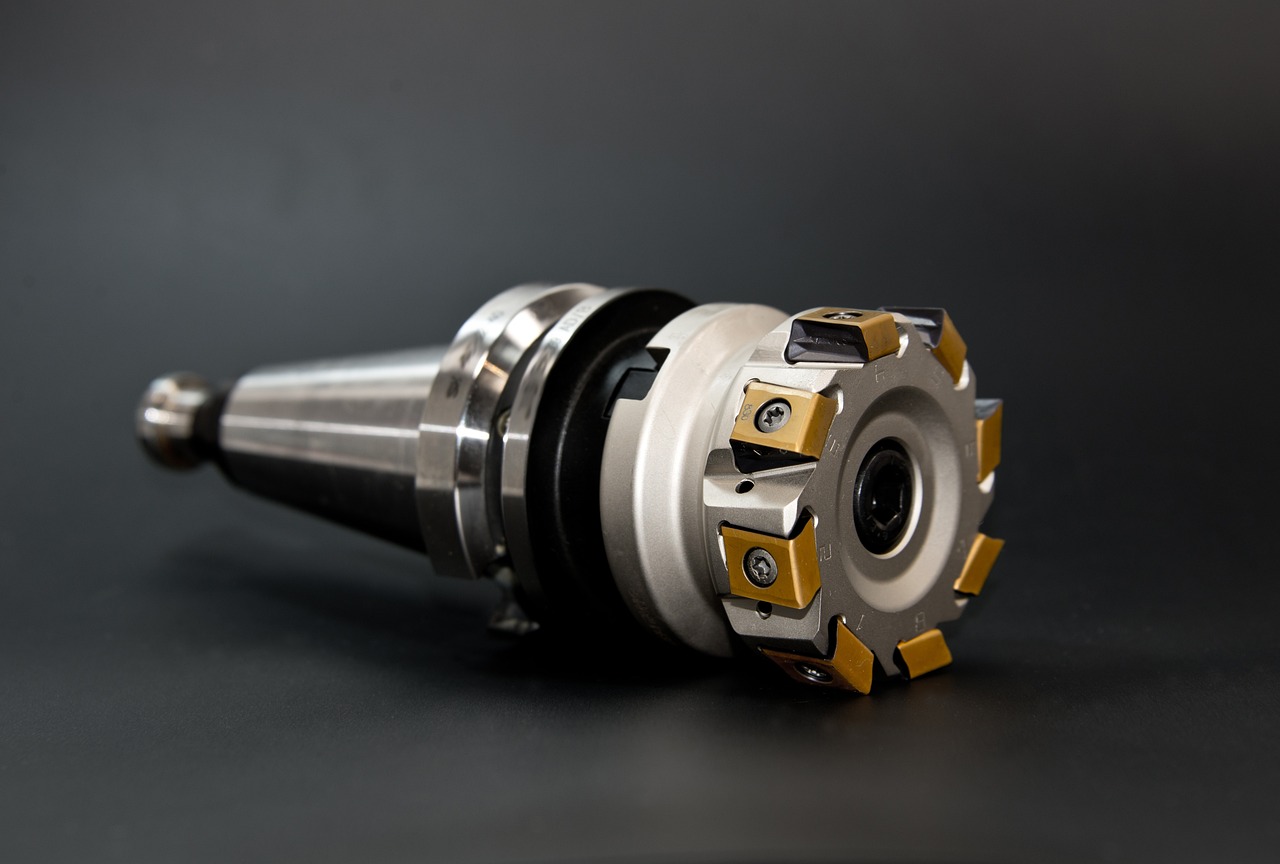
Predictive Maintenance (PdM) sử dụng data-driven approach để dự đoán khi nào thiết bị cần bảo trì, thay vì bảo trì theo lịch cố định hoặc đợi hỏng mới sửa. Với IoT và Machine Learning, chúng ta có thể giảm downtime 30-50% và chi phí bảo trì 20-40%.
| Reactive (Breakdown) | Preventive (Scheduled) | Predictive (Data-driven) |
|---|---|---|
| Sửa khi hỏng | Bảo trì theo lịch | Bảo trì khi thực sự cần |
| Downtime không kế hoạch | Downtime có kế hoạch | Downtime tối thiểu |
| Chi phí thấp ban đầu | Chi phí trung bình | Chi phí đầu tư cao nhưng ROI tốt |
| Rủi ro cao | Over-maintenance | Tối ưu cả cost và risk |
┌─────────────────────────────────────────────────────────┐
│                    Cloud/Edge Analytics                  │
│  ┌──────────────┐  ┌──────────────┐  ┌──────────────┐  │
│  │   Machine    │  │  Predictive  │  │  Dashboard   │  │
│  │   Learning   │  │    Models    │  │  & Alerts    │  │
│  └──────────────┘  └──────────────┘  └──────────────┘  │
└─────────────────────────────────────────────────────────┘
                            ▲
                            │ MQTT/HTTP/OPC UA
                            │
┌─────────────────────────────────────────────────────────┐
│                    IoT Gateway/Edge                      │
│  ┌──────────────┐  ┌──────────────┐  ┌──────────────┐  │
│  │ Data Buffer  │  │ Edge ML      │  │ Protocol     │  │
│  │ & Filtering  │  │ Inference    │  │ Translate    │  │
│  └──────────────┘  └──────────────┘  └──────────────┘  │
└─────────────────────────────────────────────────────────┘
                            ▲
                ┌───────────┼───────────┐
                │           │           │
        ┌───────▼──┐  ┌────▼────┐  ┌──▼──────┐
        │Vibration │  │  Temp   │  │ Current │
        │ Sensor   │  │ Sensor  │  │ Sensor  │
        └──────────┘  └─────────┘  └─────────┘
                │          │           │
        ┌───────▼──────────▼───────────▼────────┐
        │        Industrial Equipment            │
        │  (Motor / Pump / Gearbox / Bearing)    │
        └────────────────────────────────────────┘
1. Vibration Sensor (Accelerometer)
2. Temperature Sensor
3. Current Sensor
4. Acoustic Emission Sensor
// Arduino/PlatformIO code for IoT sensor node
#include
#include
#include
#include
#include
#include

// Sensor objects
Adafruit_ADXL345_Unified accel = Adafruit_ADXL345_Unified(12345);
OneWire oneWire(TEMP_PIN);
DallasTemperature tempSensors(&oneWire);

// MQTT client
WiFiClient espClient;
PubSubClient mqtt(espClient);

// Configuration
const char* mqtt_server = "mqtt.predictive-maintenance.com";
const char* device_id = "MOTOR_101";
const int SAMPLE_RATE = 10000; // 10kHz for vibration
const int PUBLISH_INTERVAL = 60000; // 1 minute

void setup() {
    Serial.begin(115200);

    // Init sensors
    if(!accel.begin()) {
        Serial.println("ADXL345 not found!");
    }
    accel.setRange(ADXL345_RANGE_16_G);

    tempSensors.begin();

    // Connect WiFi
    WiFi.begin(WIFI_SSID, WIFI_PASSWORD);
    while (WiFi.status() != WL_CONNECTED) {
        delay(500);
    }

    // Connect MQTT
    mqtt.setServer(mqtt_server, 1883);
}

void loop() {
    // Sample vibration at high frequency
    float vibration_rms = sampleVibration(1000); // 1000 samples

    // Read temperature
    tempSensors.requestTemperatures();
    float temperature = tempSensors.getTempCByIndex(0);

    // Read current (via analog input from current sensor)
    float current = analogRead(CURRENT_PIN) * CURRENT_SCALE;

    // Calculate features
    float vibration_peak = calculatePeak();
    float vibration_crest = vibration_peak / vibration_rms;

    // Publish to MQTT
    String payload = createJSON(vibration_rms, vibration_peak,
                                vibration_crest, temperature, current);
    mqtt.publish("sensors/motor_101/data", payload.c_str());

    delay(PUBLISH_INTERVAL);
}

float sampleVibration(int samples) {
    float sum_squares = 0;

    for(int i = 0; i < samples; i++) {
        sensors_event_t event;
        accel.getEvent(&event);

        // Calculate magnitude
        float magnitude = sqrt(event.acceleration.x * event.acceleration.x +
                              event.acceleration.y * event.acceleration.y +
                              event.acceleration.z * event.acceleration.z);

        sum_squares += magnitude * magnitude;

        delayMicroseconds(100); // 10kHz sampling
    }

    return sqrt(sum_squares / samples); // RMS
}

String createJSON(float vib_rms, float vib_peak, float crest,
                  float temp, float current) {
    String json = "{";
    json += "\"device\":\"" + String(device_id) + "\",";
    json += "\"timestamp\":" + String(millis()) + ",";
    json += "\"vibration_rms\":" + String(vib_rms, 4) + ",";
    json += "\"vibration_peak\":" + String(vib_peak, 4) + ",";
    json += "\"crest_factor\":" + String(crest, 4) + ",";
    json += "\"temperature\":" + String(temp, 2) + ",";
    json += "\"current\":" + String(current, 2);
    json += "}";
    return json;
}
Từ raw sensor data, extract các features có ý nghĩa:
# Python code for feature extraction
import numpy as np
from scipy import signal
from scipy.stats import kurtosis, skew

def extract_features(vibration_signal, fs=10000):
    """
    Extract time-domain and frequency-domain features

    Args:
        vibration_signal: 1D array of acceleration data
        fs: Sampling frequency

    Returns:
        Dictionary of features
    """
    features = {}

    # Time-domain features
    features['rms'] = np.sqrt(np.mean(vibration_signal**2))
    features['peak'] = np.max(np.abs(vibration_signal))
    features['crest_factor'] = features['peak'] / features['rms']
    features['kurtosis'] = kurtosis(vibration_signal)
    features['skewness'] = skew(vibration_signal)
    features['shape_factor'] = features['rms'] / np.mean(np.abs(vibration_signal))

    # Frequency-domain features (FFT)
    fft = np.fft.fft(vibration_signal)
    freqs = np.fft.fftfreq(len(vibration_signal), 1/fs)
    psd = np.abs(fft)**2

    # Find dominant frequencies (bearing fault frequencies)
    dominant_freq = freqs[np.argmax(psd[:len(psd)//2])]
    features['dominant_frequency'] = dominant_freq

    # Bearing fault frequency bands (example for 1800 RPM motor)
    bpfo = 1800/60 * 3.5  # Ball Pass Frequency Outer race
    bpfi = 1800/60 * 5.5  # Ball Pass Frequency Inner race
    bsf = 1800/60 * 2.3   # Ball Spin Frequency

    features['bpfo_magnitude'] = extract_band_power(psd, freqs, bpfo, 10)
    features['bpfi_magnitude'] = extract_band_power(psd, freqs, bpfi, 10)
    features['bsf_magnitude'] = extract_band_power(psd, freqs, bsf, 5)

    # Envelope analysis for bearing faults
    analytic_signal = signal.hilbert(vibration_signal)
    envelope = np.abs(analytic_signal)
    features['envelope_rms'] = np.sqrt(np.mean(envelope**2))

    return features

def extract_band_power(psd, freqs, center_freq, bandwidth):
    """Extract power in specific frequency band"""
    idx = np.where((freqs >= center_freq - bandwidth) &
                   (freqs <= center_freq + bandwidth))
    return np.sum(psd[idx])
# Train anomaly detection model
from sklearn.ensemble import IsolationForest
from sklearn.preprocessing import StandardScaler
import pandas as pd

# Load training data (normal operation only)
df_train = pd.read_csv('normal_operation_data.csv')

# Feature columns
feature_cols = ['rms', 'peak', 'crest_factor', 'kurtosis',
                'temperature', 'current', 'bpfo_magnitude']

X_train = df_train[feature_cols]

# Normalize features
scaler = StandardScaler()
X_train_scaled = scaler.fit_transform(X_train)

# Train Isolation Forest
model = IsolationForest(
    contamination=0.01,  # 1% expected anomalies
    max_samples=256,
    random_state=42
)
model.fit(X_train_scaled)

# Inference on new data
def predict_anomaly(new_features):
    """
    Returns:
        1: Normal
        -1: Anomaly (potential fault)
    """
    X_new = scaler.transform([new_features])
    prediction = model.predict(X_new)
    anomaly_score = model.score_samples(X_new)

    return prediction[0], anomaly_score[0]

# Example usage
features = extract_features(live_vibration_signal)
feature_vector = [features[col] for col in feature_cols]
is_normal, score = predict_anomaly(feature_vector)

if is_normal == -1:
    print(f"⚠️ ANOMALY DETECTED! Score: {score:.4f}")
    print("Recommended action: Schedule inspection")
Remaining Useful Life prediction sử dụng time-series deep learning:
# LSTM model for RUL prediction
import tensorflow as tf
from tensorflow.keras import layers, models

def build_rul_model(sequence_length, n_features):
    """
    Build LSTM model for Remaining Useful Life prediction

    Args:
        sequence_length: Number of time steps in sequence
        n_features: Number of features per time step
    """
    model = models.Sequential([
        layers.LSTM(128, return_sequences=True,
                   input_shape=(sequence_length, n_features)),
        layers.Dropout(0.2),
        layers.LSTM(64, return_sequences=True),
        layers.Dropout(0.2),
        layers.LSTM(32),
        layers.Dense(16, activation='relu'),
        layers.Dense(1)  # Output: RUL in hours
    ])

    model.compile(optimizer='adam', loss='mse', metrics=['mae'])
    return model

# Training data preparation
def create_sequences(data, rul_values, sequence_length=50):
    """
    Create sequences for LSTM training

    Args:
        data: Feature matrix (samples × features)
        rul_values: RUL labels for each sample
        sequence_length: Window size
    """
    X, y = [], []

    for i in range(len(data) - sequence_length):
        X.append(data[i:i+sequence_length])
        y.append(rul_values[i+sequence_length])

    return np.array(X), np.array(y)

# Train model
model = build_rul_model(sequence_length=50, n_features=7)
history = model.fit(
    X_train, y_train,
    validation_split=0.2,
    epochs=100,
    batch_size=64,
    callbacks=[
        tf.keras.callbacks.EarlyStopping(patience=10),
        tf.keras.callbacks.ModelCheckpoint('best_rul_model.h5',
                                          save_best_only=True)
    ]
)

# Prediction
def predict_rul(model, recent_data):
    """Predict RUL from recent sensor data"""
    # recent_data: Last 50 time steps of features
    rul_hours = model.predict(recent_data.reshape(1, 50, 7))
    return rul_hours[0][0]
Visualization stack: InfluxDB + Grafana
// InfluxDB query example
SELECT
    mean("vibration_rms") as "Vibration",
    mean("temperature") as "Temperature",
    mean("current") as "Current"
FROM "sensor_data"
WHERE
    "device" = 'MOTOR_101'
    AND time >= now() - 24h
GROUP BY time(1m)

// Alerting rules in Grafana
WHEN avg() OF query(A, 5m, now) IS ABOVE 0.5  // Anomaly threshold
THEN
    ALERT "Motor 101 Abnormal Vibration"
    MESSAGE "Vibration RMS exceeded threshold. Potential bearing fault."
    SEND TO maintenance_team_webhook
Tự động tạo work order khi phát hiện anomaly:
# Python backend API
from fastapi import FastAPI
from pydantic import BaseModel
import requests

app = FastAPI()

class AnomalyAlert(BaseModel):
    device_id: str
    anomaly_type: str
    severity: str
    predicted_rul: float

@app.post("/api/anomaly/detected")
async def handle_anomaly(alert: AnomalyAlert):
    """Create maintenance work order"""

    # Determine urgency
    if alert.predicted_rul < 24:  # Less than 24 hours
        priority = "URGENT"
    elif alert.predicted_rul < 168:  # Less than 1 week
        priority = "HIGH"
    else:
        priority = "NORMAL"

    # Create work order in CMMS
    work_order = {
        "title": f"{alert.anomaly_type} detected on {alert.device_id}",
        "description": f"Predictive maintenance alert. Estimated RUL: {alert.predicted_rul:.1f} hours",
        "asset_id": alert.device_id,
        "priority": priority,
        "assigned_to": "maintenance_team",
        "due_date": calculate_due_date(alert.predicted_rul)
    }

    response = requests.post(
        "https://cmms.company.com/api/work_orders",
        json=work_order,
        headers={"Authorization": f"Bearer {CMMS_API_KEY}"}
    )

    # Send notification
    send_notification(alert, priority)

    return {"status": "Work order created", "id": response.json()['id']}
Case Study: Nhà máy sản xuất ô tô (6 tháng triển khai PdM)
Investment breakdown:
Annual savings:
Predictive Maintenance 4.0 không còn là khái niệm xa vời mà đã trở thành yêu cầu cạnh tranh cơ bản. Với sự phát triển của IoT sensors giá rẻ, cloud computing mạnh mẽ và ML models chính xác, việc triển khai PdM ngày càng dễ dàng và mang lại ROI rõ rệt.
🚀 Next Steps: Bắt đầu với pilot project trên 1-2 thiết bị critical, chứng minh giá trị, sau đó scale up toàn nhà máy!


